
Overview Summary
- Multi-layer laminations combine materials into one ready-to-install component
- Reduce assembly time by eliminating manual stacking and alignment
- Improve product performance through optimized material layering
- Enhance consistency with repeatable, precision-controlled manufacturing
- Support complex geometries across automotive, electronics, and medical applications
- Enable faster production and fewer quality issues at scale
Why Custom Lamination Matters in Modern Manufacturing
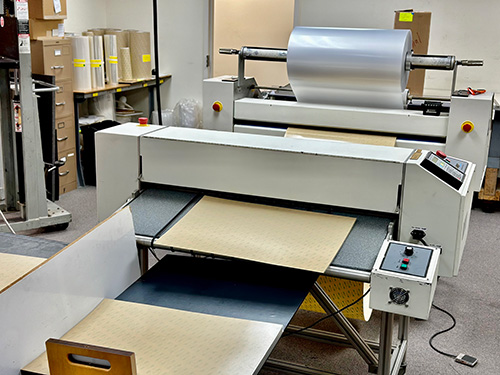 As products become more compact, complex, and performance-driven, traditional multi-step assembly methods are becoming a bottleneck. Engineers and procurement teams are increasingly looking for ways to simplify builds without sacrificing quality or functionality.
Custom lamination is one of the most effective ways to achieve this.
By bonding multiple materials into a single, ready-to-install component, manufacturers can reduce part count, streamline assembly, and ensure consistent performance across every unit produced.
What Is a Multi-Layer Lamination?
A multi-layer lamination is a precisely engineered component made by bonding two or more materials together, such as:
- Adhesives and pressure-sensitive tapes
- Foams and gasketing materials
- Films and barriers
- Electrically conductive layers
- Thermal interface materials
These layers are combined into a single part that arrives ready for installation, eliminating the need for operators to manually align and assemble individual pieces.
Reducing Assembly Time and Labor
Pre-Assembled Components Replace Multi-Step Processes
One of the most immediate benefits of custom lamination is the reduction in assembly time.
Instead of:
- Handling multiple individual components.
- Aligning layers manually.
- Applying adhesives during assembly.
A laminated part arrives:
- Pre-aligned.
- Pre-bonded.
- Ready for placement.
This can significantly reduce labor requirements and improve throughput, especially in high-volume production environments.
Fewer Touchpoints, Fewer Errors
Every manual step introduces variability. Laminated components reduce:
- Operator dependency.
- Misalignment issues.
- Adhesive application inconsistencies.
The result is a more streamlined and predictable assembly process.
Improving Performance Through Engineered Material Stacks
Layering Materials for Specific Functions
Custom laminations are not just about convenience; they are about performance optimization.
By combining materials strategically, manufacturers can achieve:
- Vibration damping and noise reduction.
- Thermal management and heat dissipation.
- EMI/RFI shielding and electrical grounding.
- Sealing against moisture, dust, or chemicals.
Each layer serves a purpose, and together they create a component that performs better than any single material alone.
Example: Electronics Applications
In electronics, laminated components are often used to:
- Combine conductive shielding layers with adhesive backings.
- Integrate insulation with thermal interface materials.
- Create compact, multi-functional assemblies for tight spaces.
This is especially critical as device densities increase and tolerances tighten.
Enhancing Consistency and Quality
Precision Manufacturing Ensures Repeatability
Consistency is a major concern for any production team. Variations in manual assembly can lead to:
- Performance inconsistencies.
- Increased scrap rates.
- Product failures in the field.
Custom lamination addresses this by:
- Using controlled processes for bonding and alignment.
- Maintaining tight tolerances across every part.
- Delivering uniform performance batch after batch.
Quality Control at the Component Level
By consolidating multiple elements into one laminated part, quality control becomes more manageable. Instead of inspecting several components and assembly steps, teams can focus on a single, verified part.
Real-World Applications of Custom Lamination
Automotive Applications
In automotive manufacturing, laminated components are used for:
- NVH reduction pads combining foam and adhesive layers.
- Sealing solutions that integrate gasketing and mounting features.
- Interior components requiring precise fit and durability.
These solutions help reduce assembly complexity while improving long-term performance.
Electronics and Electrical Systems
For electronics manufacturers, laminations enable:
- EMI/RFI shielding components with integrated adhesives.
- Thermal interface pads with consistent thickness and placement.
- Compact assemblies for high-density circuit designs.
This supports both performance and compliance requirements in increasingly demanding environments.
Medical Device Manufacturing
In medical applications, precision and reliability are critical. Laminated components are used to:
- Combine soft materials with adhesives for skin-contact applications.
- Create sterile, consistent sealing components.
- Ensure repeatable performance in sensitive devices.
These applications benefit from both the precision and cleanliness of controlled lamination processes.
When to Consider Custom Lamination
Custom lamination is especially valuable when:
- Assemblies involve multiple thin or flexible materials.
- Alignment and placement are critical to performance.
- Production speed and labor efficiency are priorities.
- Consistency across high volumes is required.
- Product designs are becoming more compact or complex.
If your current process involves multiple steps to build a single component, lamination is often a strong candidate for improvement.
How Thrust Industries Supports Custom Lamination Solutions
As manufacturing demands continue to evolve, having a partner that understands both materials and process optimization becomes essential.
Thrust Industries specializes in precision die cutting and custom lamination solutions that help manufacturers:
- Consolidate multi-part assemblies into single components.
- Improve production efficiency and reduce labor time.
- Enhance part performance through engineered material combinations.
- Maintain tight tolerances and consistent quality at scale.
With experience across automotive, electronics, medical, and industrial applications, Thrust works closely with engineering and procurement teams to develop solutions that perform reliably in real-world conditions.
Simplifying Complexity Without Compromise
Custom lamination is not just a manufacturing shortcut. It is a strategic approach to improving how products are built and how they perform.
By reducing assembly steps, optimizing material performance, and ensuring consistent quality, laminated components help manufacturers meet the demands of modern production without adding unnecessary complexity.
If you are evaluating ways to streamline your assemblies or improve component performance, the right lamination solution can make a measurable difference.
Ready to Improve Your Assembly Process?
If you are dealing with complex, multi-layer components or looking to reduce assembly time without sacrificing quality, Thrust Industries can help. Our team works alongside engineers and buyers to develop precision laminated solutions designed to meet specific application needs.
Contact us to discuss your project, or request a quote to get started.