
Key Takeaways:
- Increasing device density and miniaturization are amplifying electromagnetic interference (EMI) risks across industries.
- Faster data speeds and high-frequency signals demand more precise and reliable RFI shielding solutions.
- Regulatory compliance standards are becoming stricter, making shielding performance a design-critical requirement.
- Poor shielding can result in failed certifications, product recalls, signal degradation, and reduced reliability.
- Precision die-cut and custom-converted shielding components help engineers control interference without compromising design flexibility.
- Strategic supplier partnerships ensure tight tolerances, rapid prototyping, and scalable production for shielding solutions.
Why EMI/RFI Shielding Is More Critical Than Ever
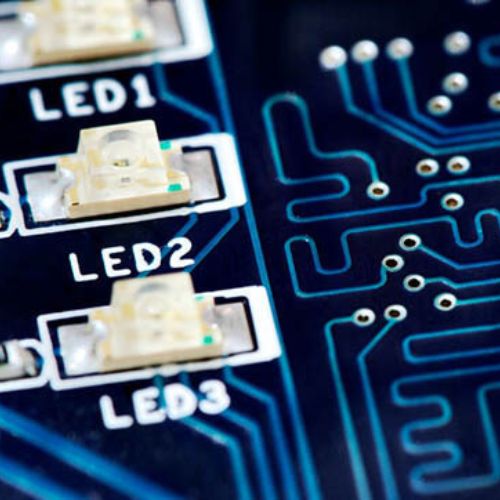 Electronics today are more compact, more powerful, and more connected than at any point in history. From industrial automation systems to electric vehicles and smart appliances, manufacturers are packing greater functionality into smaller footprints.
This progress comes with a tradeoff: higher electromagnetic interference (EMI) and radio-frequency interference (RFI) risks.
When circuits are placed closer together and operate at higher frequencies, unintended emissions increase. Without proper shielding, these emissions can:
- Disrupt signal integrity.
- Interfere with adjacent components.
- Degrade system performance.
- Cause devices to fail regulatory testing.
For product development teams, EMI/RFI shielding is no longer a secondary design feature. It is a primary performance requirement.
Higher Device Density and Miniaturization Challenges
Miniaturization creates efficiency and cost advantages, but it also increases electromagnetic coupling between components.
As board layouts become more compact:
- Trace spacing shrinks.
- Power densities rise.
- Signal routing becomes more complex.
- Thermal constraints intensify.
These conditions make systems more susceptible to interference. Even minor leakage through seams, enclosures, or cable interfaces can result in measurable performance degradation.
Precision shielding components, such as conductive gaskets, die-cut foils, and custom-fitted adhesive-backed materials, must be engineered to match tight tolerances. A small gap or misalignment can compromise the entire enclosure’s shielding effectiveness.
Faster Data Speeds and High-Frequency Performance
Modern electronics are transmitting and processing data at increasingly high frequencies. Whether in automotive control modules, industrial IoT devices, or consumer electronics, higher data speeds mean higher sensitivity to interference.
At elevated frequencies:
- Signal edges become sharper.
- Noise margins shrink.
- Crosstalk increases.
- Shielding effectiveness must extend across broader frequency ranges.
Shielding materials must be selected and converted with careful attention to conductivity, grounding strategy, and mechanical fit. Improper material choice or inconsistent manufacturing can create performance variability from unit to unit.
Consistency is critical, especially for high-volume production environments where repeatability directly impacts field reliability.
Regulatory Compliance Pressures Are Intensifying
EMI compliance is governed by a range of regulatory frameworks, depending on the industry and application. Manufacturers across sectors must demonstrate that their products meet emissions and immunity thresholds before they can be brought to market.
Failed compliance testing can lead to:
- Expensive redesigns.
- Delayed product launches.
- Additional validation cycles.
- Increased engineering and testing costs.
As compliance margins tighten, shielding must be integrated into product design earlier in the development cycle. Waiting until final validation to address interference often results in rushed fixes and compromised performance.
Proactive EMI/RFI shielding strategies help ensure smoother certification processes and protect production timelines.
The Role of Precision Shielding Components
Effective shielding is not simply about adding conductive material. It requires:
- Accurate die-cut geometries that match enclosure interfaces.
- Controlled adhesive application for reliable bonding.
- Clean edges and tight tolerances to prevent leakage.
- Material expertise to select the correct conductive substrate.
Common EMI/RFI shielding solutions include:
- Conductive foils and films.
- Metalized fabrics.
- Electrically conductive adhesives.
- Precision die-cut gaskets.
- Layered assemblies combining insulation and shielding properties.
Each application presents unique constraints involving temperature, vibration, compression set, and environmental exposure. Precision conversion ensures shielding performs consistently in real-world operating conditions.
Why Material Expertise Matters
Shielding effectiveness depends heavily on proper material selection. Engineers must evaluate:
- Conductivity and surface resistivity.
- Frequency attenuation range.
- Compression and recovery characteristics.
- Adhesion strength and compatibility.
- Long-term durability.
Not all conductive materials behave the same under load or environmental stress. Selecting and converting the right substrate requires both technical understanding and manufacturing precision.
Working with a supplier that understands material behavior, particularly conductive tapes, foams, films, and specialty adhesives, reduces risk and accelerates development cycles.
How Thrust Industries Supports Precision Shielding Applications
As shielding requirements grow more complex, manufacturers need partners who can translate engineering intent into repeatable production components.
Thrust Industries provides:
- Precision die cutting and laser cutting of conductive and shielding materials.
- Conversion of specialty adhesive-backed films and foils.
- Tight tolerance control for complex geometries.
- Rapid prototyping to support validation and compliance testing.
- Scalable production capabilities for high-volume programs.
With ISO-certified quality systems and experience serving electronics, automotive, energy, and appliance manufacturers, Thrust Industries helps ensure shielding components meet both performance and timeline expectations.
From initial prototype to full-scale production, the focus remains on consistency, communication, and defect-free delivery.
Designing for Performance, Reliability, and Compliance
EMI/RFI shielding is no longer an optional add-on. It is a fundamental part of electronics design strategy.
As devices continue to evolve with higher densities, faster speeds, and stricter regulatory scrutiny, precision shielding components play a direct role in:
- Protecting signal integrity.
- Maintaining product reliability.
- Reducing compliance risk.
- Preventing costly redesigns.
- Supporting long-term production scalability.
Manufacturers that prioritize shielding early and partner with experienced precision converters position themselves to move faster, reduce risk, and deliver more reliable products to market.
Ready to Talk About Your Shielding Requirements?
If you are developing a new product or refining an existing design and need precision EMI/RFI shielding components, the team at Thrust Industries is here to help.
Contact Thrust Industries with your specifications, drawings, or material questions to discuss how custom die-cut and converted shielding solutions can support your performance and compliance goals.