
Rethinking Fastening Methods in Modern Manufacturing
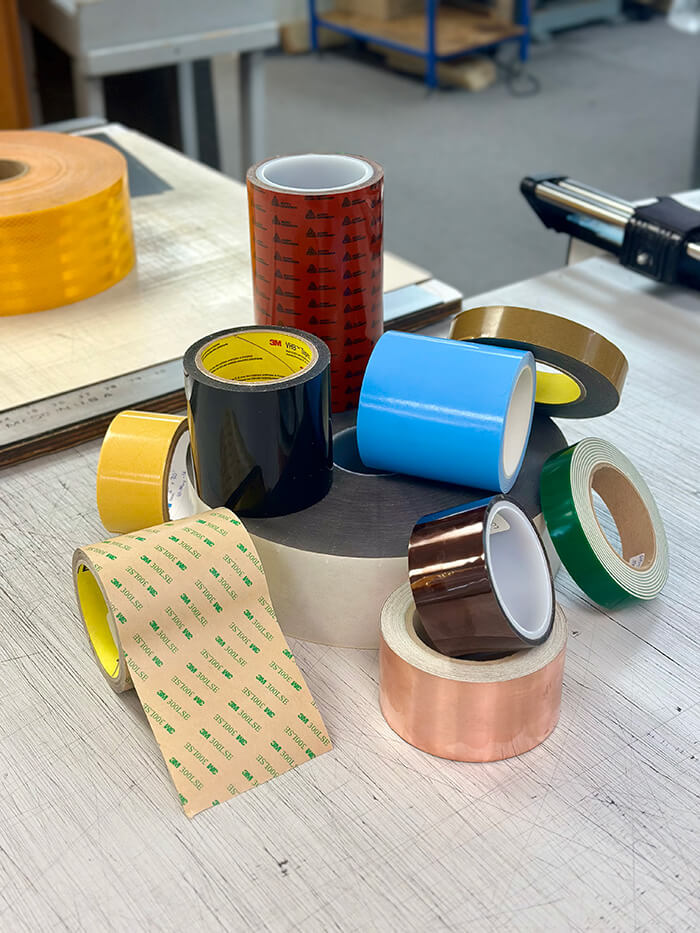 For decades, mechanical fasteners like screws, bolts, and rivets have been the default solution for joining components. They are familiar, widely available, and trusted. But as products evolve, especially in industries like automotive, electronics, and appliances, manufacturers are re-evaluating whether traditional fastening methods are still the most efficient and cost-effective option.
Die cut adhesive tapes have emerged as a viable alternative, offering advantages in speed, performance, and design flexibility. However, switching from mechanical fasteners is not a simple one-to-one replacement. It requires a broader look at cost, performance, and lifecycle impact.
Assembly Speed and Labor Efficiency
Why Assembly Time Matters More Than Ever
One of the most immediate benefits of die cut tapes is the impact on assembly speed.
Mechanical fastening often involves:
- Drilling or punching holes.
- Aligning multiple components.
- Installing hardware using tools.
- Verifying torque or tightness.
Die cut tapes simplify this process:
- Pre-cut adhesive components are applied directly.
- No secondary operations like drilling or tapping.
- Reduced need for specialized tools or skilled labor.
This can lead to:
- Faster cycle times.
- Lower labor costs.
- Reduced operator variability.
In high-volume production environments, even small time savings per unit can translate into significant cost reductions over time.
Material and Component Cost Considerations
Looking Beyond Piece Price
At first glance, mechanical fasteners may appear less expensive than adhesive materials. However, focusing only on unit cost can be misleading.
Mechanical fastening often introduces hidden costs:
- Additional components such as washers, nuts, or inserts
- Increased part complexity, including reinforced areas or bosses
- Inventory management for multiple SKUs
Die cut tapes can reduce or eliminate these factors:
- Fewer components required
- Simplified part designs
- Lower inventory complexity
When evaluated holistically, many manufacturers find that adhesive solutions provide a more cost-efficient system overall.
Performance and Reliability Over Time
Load Distribution and Stress Reduction
Mechanical fasteners create concentrated stress points. Over time, this can lead to:
- Material fatigue.
- Cracking or deformation.
- Loosening due to vibration.
Die cut tapes, by contrast, distribute load across the entire bonded surface. This results in:
- Improved stress distribution.
- Reduced risk of localized failure.
- Better performance under vibration and thermal cycling.
Environmental Resistance
Modern adhesive tapes are engineered to withstand:
- Temperature fluctuations.
- Moisture and humidity.
- UV exposure.
- Chemical contact.
In many applications, they provide equal or superior durability compared to traditional fasteners.
Lifecycle Maintenance and Long-Term Costs
Reducing Maintenance and Rework
Mechanical fasteners often require ongoing attention:
- Retightening due to vibration
- Corrosion or wear over time
- Potential for component damage during removal
Adhesive bonding eliminates many of these concerns:
- No loosening over time
- No risk of stripped threads or hardware failure
- Cleaner, non-invasive bonding
Benefits include:
- Lower maintenance costs.
- Fewer warranty issues.
- Reduced downtime in field applications.
Improving Product Longevity
By minimizing stress points and eliminating mechanical wear, adhesive solutions can extend the lifespan of assembled products. This is particularly valuable in industries where reliability is critical.
Design Flexibility and Aesthetic Benefits
Enabling New Design Possibilities
Switching to die cut tapes can open up new design opportunities:
- No visible fasteners for cleaner aesthetics
- Thinner, lighter assemblies
- Greater flexibility in material combinations
This is especially important in:
- Consumer electronics.
- Automotive interiors.
- Appliances and enclosures.
Engineers can focus on performance and design rather than accommodating hardware constraints.
Where Mechanical Fasteners Still Make Sense
While die cut tapes offer many advantages, they are not the right solution for every application.
Mechanical fasteners may still be preferred when:
- High peel or tensile loads exceed adhesive capabilities.
- Components require frequent disassembly.
- Extreme environmental conditions demand redundant fastening.
The most effective approach is often application-specific, combining engineering analysis with real-world testing.
Successfully Making the Transition
The Importance of Material Expertise
Switching from mechanical fasteners to adhesive solutions requires careful consideration of:
- Substrate compatibility.
- Surface preparation.
- Environmental conditions.
- Load requirements.
Early collaboration between engineering and material experts can prevent costly redesigns or performance issues.
Prototyping and Validation
Before full-scale production, it is essential to:
- Test adhesive performance under real conditions.
- Validate bond strength and durability.
- Optimize die cut geometry for application efficiency.
This ensures a smooth transition with minimal risk.
How Thrust Industries Supports Fastener Replacement Strategies
For manufacturers exploring adhesive-based assembly, working with an experienced converting partner can make all the difference.
Thrust Industries specializes in:
- Precision die cutting of adhesive tapes, foams, and films.
- Custom lamination solutions for multi-layer assemblies.
- Rapid prototyping to validate designs quickly.
- Scalable production with consistent quality.
Their team helps evaluate whether adhesive solutions are the right fit and ensures that performance, cost, and manufacturability are aligned from the start.
Moving Toward Smarter Assembly Solutions
As manufacturing continues to prioritize efficiency, reliability, and design flexibility, the shift from mechanical fasteners to die cut pressure sensitive adhesive tapes is gaining momentum. The decision is not just about replacing one component with another, it is about rethinking the entire assembly process.
Understanding the full cost and performance tradeoffs allows manufacturers to make informed decisions that improve both short-term productivity and long-term product performance.
If you are evaluating adhesive solutions for your application, the team at Thrust Industries can help you identify the right materials and processes for success. Contact us or request a quote today.
 What Is the Role of Pressure-Sensitive Adhesives in Modern Product Design?
  How to Get the Most from Your 3M™ VHB™ Tape
  Die Cut 3M™ Foil Tapes Provide Advantages for EMI/RFI Management
 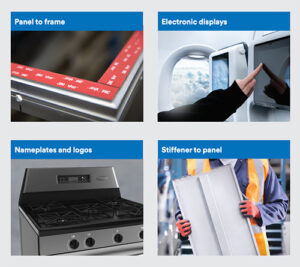 4 Industry Applications for 3M™ VHB™ Tape
  5 Innovative Projects that Utilize 3M™ Dual Lock™ Tape