
Key Takeaways:
- Die cutting, laser cutting, and waterjet cutting each excel in different manufacturing applications.
- Material type, production volume, tolerances, and edge quality should drive your process selection.
- Die cutting typically delivers the lowest cost per part for high-volume production.
- Laser cutting offers exceptional flexibility for prototypes and complex geometries.
- Waterjet cutting is ideal for thick materials and applications where heat cannot be introduced.
- Working with an experienced manufacturing partner early in the design process can improve quality while reducing production costs.
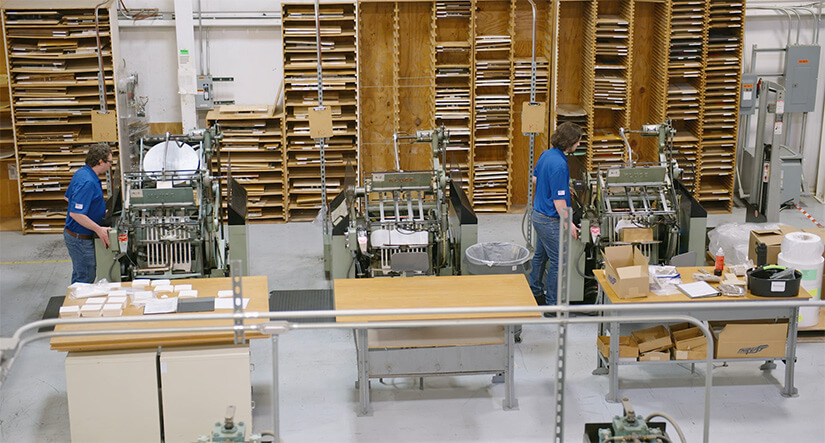
Choosing the right cutting process is one of the most critical decisions during product development. The manufacturing method you choose affects production costs, turnaround times, part consistency, material compatibility, and overall product performance.
While die cutting, laser cutting, and waterjet cutting can all produce precision components, each technology is designed to solve different manufacturing challenges. Understanding their strengths and limitations helps engineers and procurement teams avoid unnecessary costs while ensuring components perform as intended.
What Is Die Cutting?
Die cutting uses a precision-made steel rule or hard tooling die to cut consistent shapes from sheet materials.
It is commonly used for:
- Pressure-sensitive adhesives
- Foam materials
- Rubber
- Gaskets
- Films
- Plastics
- Electrical insulation
- EMI/RFI shielding materials
- Specialty tapes
Once tooling is created, die cutting becomes one of the fastest and most repeatable manufacturing methods available.
Advantages of Die Cutting
- Extremely fast production speeds
- Excellent repeatability
- Low cost per part at higher volumes
- Tight dimensional consistency
- Capable of producing thousands or millions of identical parts
- Compatible with laminated and adhesive-backed materials
Limitations
- Initial tooling investment
- Less economical for one-off prototypes
- Significant design changes may require new tooling
For manufacturers producing medium to high-volume parts, die cutting often provides the best balance of quality, speed, and cost.
What Is Laser Cutting?
Laser cutting uses a highly focused beam of light to vaporize or melt material with exceptional precision.
Unlike die cutting, no physical tooling is required, making laser cutting attractive for early-stage development and low-volume production.
Laser cutting is frequently used for:
- Plastics
- Thin metals
- Acrylic
- Films
- Rubber
- Specialty composites
- Prototype components
Advantages of Laser Cutting
- No tooling required
- Excellent for rapid prototyping
- Handles intricate geometries
- Easy to modify CAD files between revisions
- Very high dimensional accuracy
Limitations
- Slower production for large quantities
- Higher cost per part than die cutting in production runs
- Heat can discolor or affect certain materials
- Some foams and adhesives are not ideal laser-cutting candidates
Laser cutting is often the preferred choice when designs continue evolving or production quantities remain relatively low.
What Is Waterjet Cutting?
Waterjet cutting uses a high-pressure stream of water, sometimes combined with abrasive media, to cut through materials without generating heat.
This makes it ideal for materials that could be damaged by thermal cutting methods.
Waterjet cutting is commonly used for:
- Thick rubber
- Metals
- Stone
- Ceramics
- Composite materials
- Heavy plastics
Advantages of Waterjet Cutting
- No heat affected zone
- Excellent edge quality
- Cuts very thick materials
- Suitable for heat-sensitive materials
- Minimal material distortion
Limitations
- Slower cutting speeds
- Higher operating costs
- Less practical for very high-volume production
- Generally unnecessary for thin flexible materials
Waterjet cutting excels when material integrity is more important than production speed.
Comparing Die Cutting, Laser Cutting, & Waterjet
| Comparison Factor | Die Cutting | Laser Cutting | Waterjet Cutting |
|---|---|---|---|
| Best Production Volume | Medium to high-volume production | Prototypes and low-volume production | Low to medium-volume specialty applications |
| Tooling Required | Yes, custom die required | No | No |
| Initial Setup Cost | Moderate due to tooling | Low | Low to moderate |
| Cost Per Part | Lowest for production runs | Higher than die cutting at volume | Generally the highest |
| Material Thickness | Thin and flexible materials | Thin to moderate materials | Thin to very thick materials |
| Heat Generated | None | Yes | None |
| Best Materials | Adhesives, foams, rubber, films, gaskets, electrical insulation | Plastics, acrylic, thin metals, films, composites | Thick rubber, metals, composites, ceramics, stone |
| Design Flexibility | Limited after tooling is built | Excellent, CAD changes are easy | Excellent |
| Edge Quality | Clean, consistent edges | Very precise edges, slight heat effects possible | Clean edges with no heat-affected zone |
| Speed for High Volumes | Excellent | Moderate | Slower |
| Repeatability | Excellent | Excellent | Excellent |
| Ideal Applications | High-volume production components with consistent geometry | Product development, prototypes, complex shapes, frequent design revisions | Heat-sensitive materials, thick materials, specialty industrial components |
Quick Rule of Thumb
- Choose die cutting when you need the lowest cost per part and consistent quality in medium to high-volume production.
- Choose laser cutting when you’re prototyping, making frequent design revisions, or producing lower quantities.
- Choose waterjet cutting when material thickness or heat sensitivity makes thermal cutting methods unsuitable.
Which Cutting Process Is Best for Adhesives, Foams, and Flexible Materials?
For manufacturers working with:
- 3M™ tapes
- Foam components
- EMI shielding
- Electrical insulation
- Rubber gaskets
- Laminated materials
Die cutting is typically the preferred manufacturing process.
These materials often require:
- Clean edges
- Consistent adhesive performance
- Accurate kiss cutting
- Repeatable tolerances
- High-volume production capability
Because die cutting applies controlled mechanical pressure rather than heat, many pressure-sensitive materials retain their intended performance characteristics.
Don’t Choose a Process Based on Equipment Alone
One of the biggest mistakes manufacturers make is selecting a cutting process before evaluating the complete application.
Instead, consider questions such as:
- What material is being converted?
- What production volume is expected?
- How often will the design change?
- What tolerances are required?
- Does the material contain pressure-sensitive adhesive?
- Are secondary operations required?
- Will production eventually scale?
The answers often point clearly toward one manufacturing method over another.
Helping You Select the Right Manufacturing Process
Thrust Industries regularly helps engineers and procurement teams evaluate whether die cutting, laser cutting, or another converting process is the best fit for a particular application.
Because we offer precision die cutting, laser cutting, material converting, laminating, adhesive converting, and rapid prototyping, we can recommend the process based on performance requirements rather than forcing a one-size-fits-all solution.
Whether you’re developing a prototype or preparing for full-scale production, our engineering team can help identify the most efficient path to consistent, high-quality components.
If you’re evaluating cutting methods for a new component, contact Thrust Industries. We’ll review your application, material selection, production goals, and tolerances to help determine the manufacturing process that delivers the best combination of quality, speed, and long-term value.
 5 Red Flags That Mean It’s Time to Switch Die Cut Suppliers
  How to Write a Die Cut Specification That Prevents Rework and Rejected Parts
  How Advanced Foams and Films Are Changing Electronics Enclosures
  What to Know About Global Supply Chain Risks for Precision Die-Cut Components
  Thrust Industries Expands Capabilities with New Cutting Technology