
Key Takeaways:
- Advanced foams and films are helping electronics manufacturers reduce enclosure weight and thickness without sacrificing performance.
- New EMI/RFI shielding materials are improving protection against signal interference in compact electronic assemblies.
- Conductive foams, metalized films, graphite materials, and hybrid laminates are enabling more flexible enclosure designs.
- Engineers are using thinner substrates to support smaller devices, tighter packaging requirements, and higher component density.
- Modern die-cut materials can provide thermal management, vibration dampening, sealing, insulation, and shielding in a single assembly.
- Precision converting and custom material selection are becoming increasingly important as electronics designs continue to evolve.
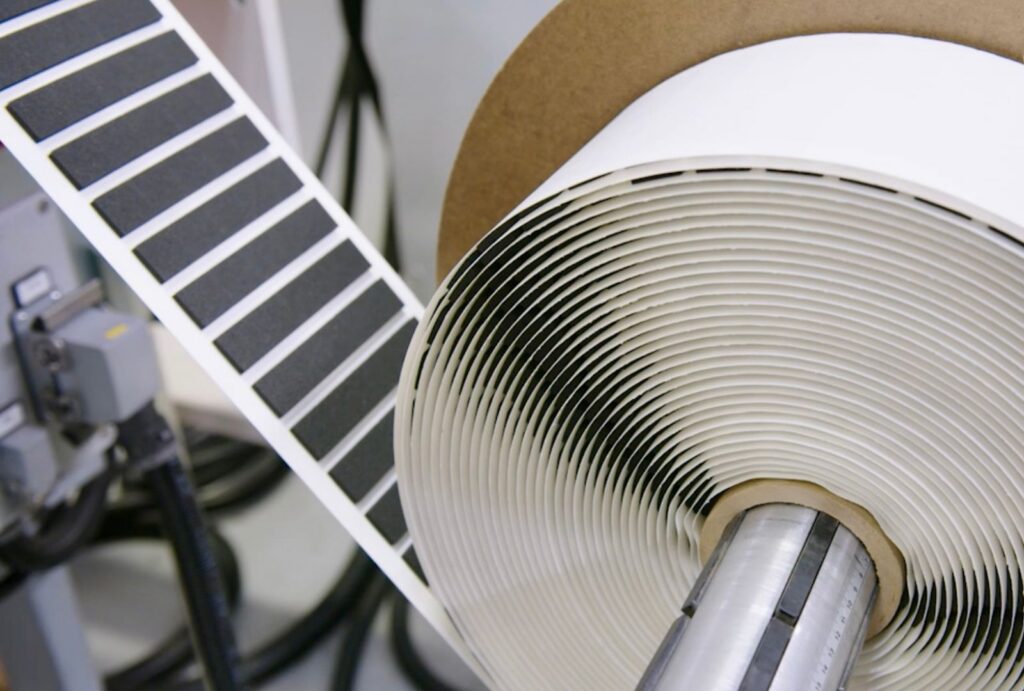
Shrinking Electronics, Growing Demands
From automotive electronics and industrial controls to consumer devices and energy systems, manufacturers are under pressure to fit more functionality into tighter spaces without introducing heat, vibration, or electromagnetic interference problems.
These electronic industry challenges are driving rapid innovation in advanced foams, films, conductive tapes, and shielding materials used inside electronics enclosures.
Today’s electronics designers are no longer relying solely on bulky metal shielding or thick gasketing materials. Instead, emerging substrates and engineered laminates are allowing manufacturers to create lighter, thinner, and more efficient enclosure systems that still meet demanding performance requirements.
Why Electronics Enclosures Are Becoming More Complex
Electronics enclosures used to serve relatively simple functions:
- Protect internal components
- Prevent contamination
- Provide basic electrical isolation
- Manage airflow and heat
Now, enclosure materials often play a direct role in device performance.
Modern enclosures may also need to:
- Block EMI and RFI interference.
- Dissipate heat from densely packed electronics.
- Reduce vibration and acoustic noise.
- Prevent moisture intrusion.
- Support wireless communication requirements.
- Maintain tight dimensional tolerances in compact assemblies.
- Reduce overall product weight.
As electronic devices become more connected and more compact, traditional enclosure materials can become limiting. Heavy metal shielding components increase weight, consume space, and complicate assembly processes.
This is where advanced foams and films are changing the design conversation.
Emerging EMI/RFI Shielding Materials
Electromagnetic interference (EMI) and radio frequency interference (RFI) can disrupt sensitive electronics, reduce signal integrity, and create reliability issues in connected systems.
Historically, shielding often relied on rigid metal enclosures or thick conductive gasketing. While effective, those approaches can add cost, complexity, and unnecessary weight.
Newer shielding materials are providing more flexible alternatives.
Conductive Foams
Conductive foams combine lightweight compressible substrates with conductive coatings or conductive particle loading.
These materials can provide:
- EMI shielding.
- Environmental sealing.
- Compression recovery.
- Gap filling in uneven assemblies.
Conductive foams are especially useful in electronics enclosures where space constraints require thin-profile gasketing solutions that can still maintain shielding continuity.
Applications include:
- Automotive electronics.
- Telecom equipment.
- Battery enclosures.
- Medical electronics.
- Industrial controls.
Metalized Films
Metalized polymer films are increasingly replacing heavier shielding materials in compact electronic products.
These films typically feature thin conductive layers such as:
- Copper.
- Aluminum.
- Nickel.
- Silver.
Because the conductive layer is extremely thin, manufacturers can achieve effective shielding performance without adding significant bulk or weight.
Metalized films are commonly used for:
- Flexible circuit shielding.
- Display assemblies.
- Portable electronics.
- Lightweight enclosure liners.
- Aerospace electronics.
Their flexibility also allows designers to conform shielding materials to complex geometries that would be difficult or costly with rigid materials.
Graphite and Carbon-Based Films
Thermally conductive graphite films and carbon-based substrates are becoming increasingly important in high-density electronics.
These materials help address two critical challenges simultaneously:
- Heat dissipation.
- EMI management.
Graphite films are particularly attractive in applications where passive thermal management is necessary, but space is extremely limited.
Common applications include:
- Consumer electronics.
- EV battery systems.
- Power electronics.
- LED systems.
- High-speed computing hardware.
Thinner Substrates Are Enabling Smaller Designs
Miniaturization continues to influence nearly every electronics market. As device footprints shrink, enclosure materials must perform multiple functions while consuming minimal space.
Advanced substrate technologies now allow engineers to create ultra-thin layered materials that combine:
- Shielding,
- Bonding,
- Insulation,
- Sealing,
- Thermal management,
- And vibration control.
In many cases, modern converted materials can replace multiple individual components within an enclosure assembly. For manufacturers, this can create several advantages:
- Reduced assembly complexity
- Fewer part numbers
- Lower product weight
- Faster assembly processes
- Improved consistency
- Better packaging efficiency
Thin-profile adhesive transfer tapes and engineered films are also helping manufacturers maintain strong bonding performance without increasing stack-up thickness inside assemblies.
Flexible Hybrid Material Constructions
One of the biggest advancements in enclosure design is the use of hybrid laminated materials. These constructions combine multiple engineered layers into a single custom-converted part.
Examples may include combinations of:
- Conductive foil
- Foam spacers
- Pressure-sensitive adhesives
- Polyester films
- Polyimide layers
- Thermal interface materials
- Insulating substrates
Instead of installing several separate components during assembly, manufacturers can apply a single precision-cut part that performs multiple functions simultaneously.
This approach improves repeatability while reducing installation time and potential alignment errors.
Precision Converting Matters More Than Ever
As advanced materials become thinner and more specialized, converting accuracy becomes increasingly important.
Electronics manufacturers often require:
- Tight tolerances,
- Intricate geometries,
- Clean edges,
- Consistent adhesive performance,
- And repeatable material alignment.
Precision die cutting, laser cutting, and custom converting allow advanced foams and films to be integrated into complex enclosure systems without compromising fit or function.
This is particularly important in industries such as:
- Automotive electronics
- Aerospace systems
- Industrial automation
- Medical devices
- Energy storage systems
- Telecommunications infrastructure
Small inconsistencies in converted materials can affect shielding continuity, thermal performance, or assembly reliability.
How Thrust Industries Supports Advanced Electronics Material Applications
As electronics enclosure materials continue to evolve, manufacturers increasingly need converting partners that understand both material behavior and production requirements.
Thrust Industries supports manufacturers with custom converting solutions for advanced foams, films, adhesives, tapes, and shielding materials used in demanding electronic applications.
Capabilities include:
- Precision die cutting
- Laser cutting
- Custom laminating
- Adhesive converting
- Prototype development
- High-volume production support
For manufacturers working with complex EMI/RFI shielding materials, thin-profile substrates, or multi-layer constructions, precision and repeatability are critical to final assembly performance.
Thrust Industries works with customers across industries, including electronics, automotive, appliance manufacturing, and energy production, to help develop reliable converted material solutions for evolving enclosure requirements.
Thrust Meets Developing Needs in the Electronics Industry
As devices become smaller, lighter, and more connected, manufacturers need materials that can deliver multiple performance benefits within increasingly tight spaces. Conductive foams, metalized films, graphite substrates, and hybrid laminates are helping engineers achieve improved EMI/RFI shielding, thermal management, and assembly efficiency without relying on bulky traditional materials.
Precision converting has become a critical part of making these advanced materials perform consistently in real-world applications. Thrust Industries understands how to integrate these evolving substrates into enclosure designs to improve reliability, reduce assembly complexity, and support future electronics innovation.
To learn more about custom converting solutions for advanced foams, films, adhesives, and shielding materials, contact our team, or request a quote today.
 5 Red Flags That Mean It’s Time to Switch Die Cut Suppliers
  Die Cutting, Laser Cutting, or Waterjet: Which Process Is Right for Your Component?
  How to Write a Die Cut Specification That Prevents Rework and Rejected Parts
  Thrust Industries Expands Capabilities with New Cutting Technology